What To Do If Your Child Gets Lost in a Store
Every parent's worst nightmare: you look down at your phone for just a moment, and when you look up, your child has vanished into a crowded store. It happens more often than you'd think, and being prepared can make the difference between a quick reunion and a terrifying ordeal.
Before You Go: Preparation Is Everything
The best time to prepare for getting lost is before it happens. Have regular conversations with your child about what to do if they can't find you. Use calm, reassuring language — not fear-based warnings.
- Teach your child your full name (not just "Mom" or "Dad").
- Practice reciting your phone number together.
- Dress your child in bright, memorable colors on outings.
- Take a photo of your child on your phone before entering crowded places.
The PreSafe "Lost? Look!" chapter teaches children to stop, look for a helper (like a store worker), and say their parent's name. Practice this at home before you need it.
Teach the "Freeze and Find" Method
When children realize they're lost, their first instinct is often to run and search for their parent. This actually makes things worse. Instead, teach the "Freeze and Find" method:
- FREEZE — Stop right where you are. Don't walk around.
- LOOK — Look around for Mom or Dad.
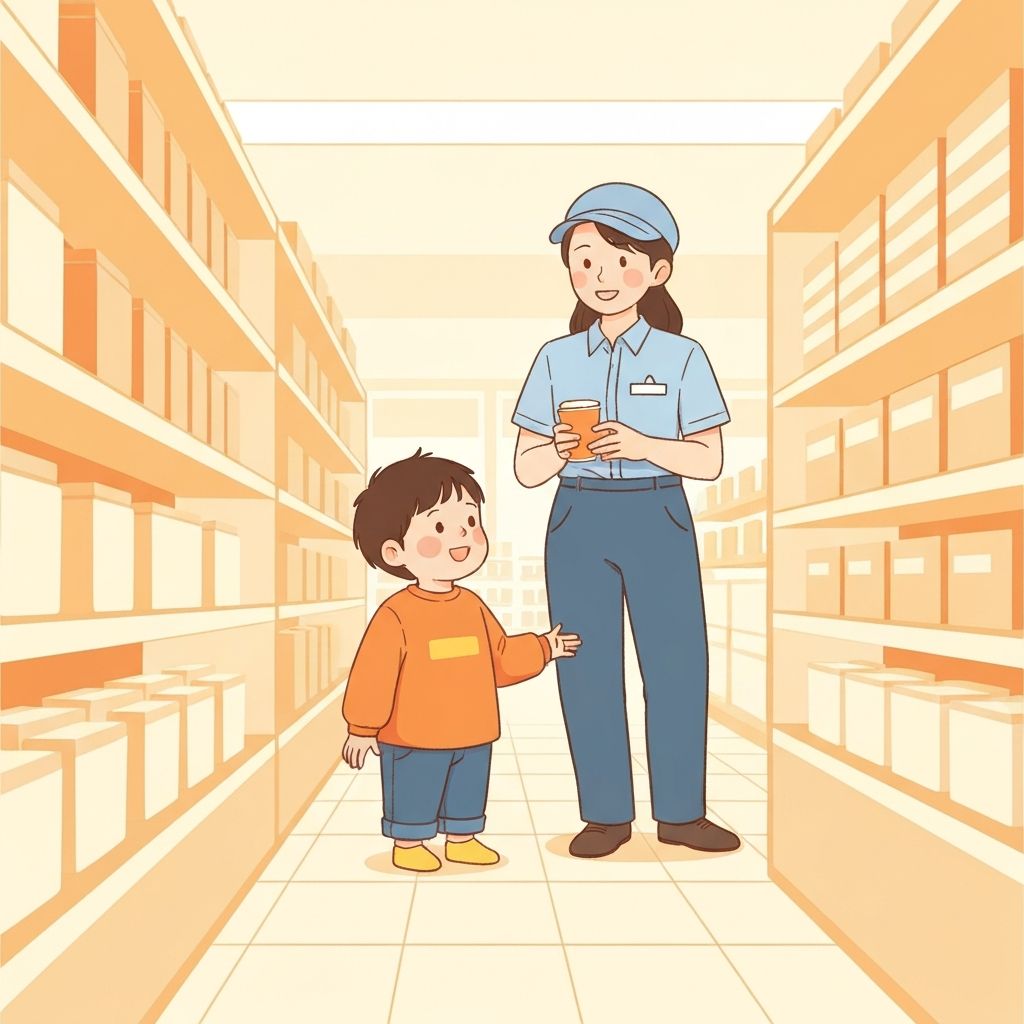
- FIND A HELPER — Look for someone in a uniform or a store worker.
- SAY YOUR NAME — Tell the helper your parent's full name.
Who Is a Safe Helper?
Teaching your child who to approach for help is just as important as teaching them what to do. Safe helpers include store employees (look for name tags or uniforms), security guards, police officers, or another parent with children.
Teach your child: "If someone you don't know asks you to go with them, say NO and find a helper." Even well-meaning strangers should not take your child away from the area.
What Parents Should Do
If you realize your child is missing, stay calm and act quickly. Most lost-child situations in stores are resolved within minutes.
- Alert store staff immediately — they have protocols for this.
- Stay near where you last saw your child.
- Call out your child's name loudly and clearly.
- Have a recent photo ready on your phone to show staff.
- If not found within 10 minutes, call local authorities.
Practice Makes Perfect
Role-play getting lost scenarios at home. Pretend you're in a store and have your child practice the steps. The more familiar they are with the plan, the calmer they'll be if it actually happens. Remember, preparedness reduces panic — for both you and your child.
Make It a Game
Turn safety practice into a scavenger hunt at the store. Ask your child to spot helpers, identify exits, and practice saying their full name and your phone number. Reward them with praise and encouragement for getting it right.
Explore the PreSafe Early-Age Safety Workbook
7 essential safety chapters, fun activities, catchy rhymes, and lifetime access to all video lessons. Everything you need to keep your little one safe.
You Might Also Enjoy

When Should Kids Start Learning About Stranger Danger?
"Stranger danger" used to mean "don't talk to strangers." But modern safety experts recommend a more nuanced approach. Here's when and how to start the conversation with your little one.
How to Teach Fire Safety to a 4-Year-Old
Fire safety doesn't have to be scary. Learn age-appropriate ways to teach your preschooler what to do in case of a fire — with games, songs, and simple rules they'll actually remember.